
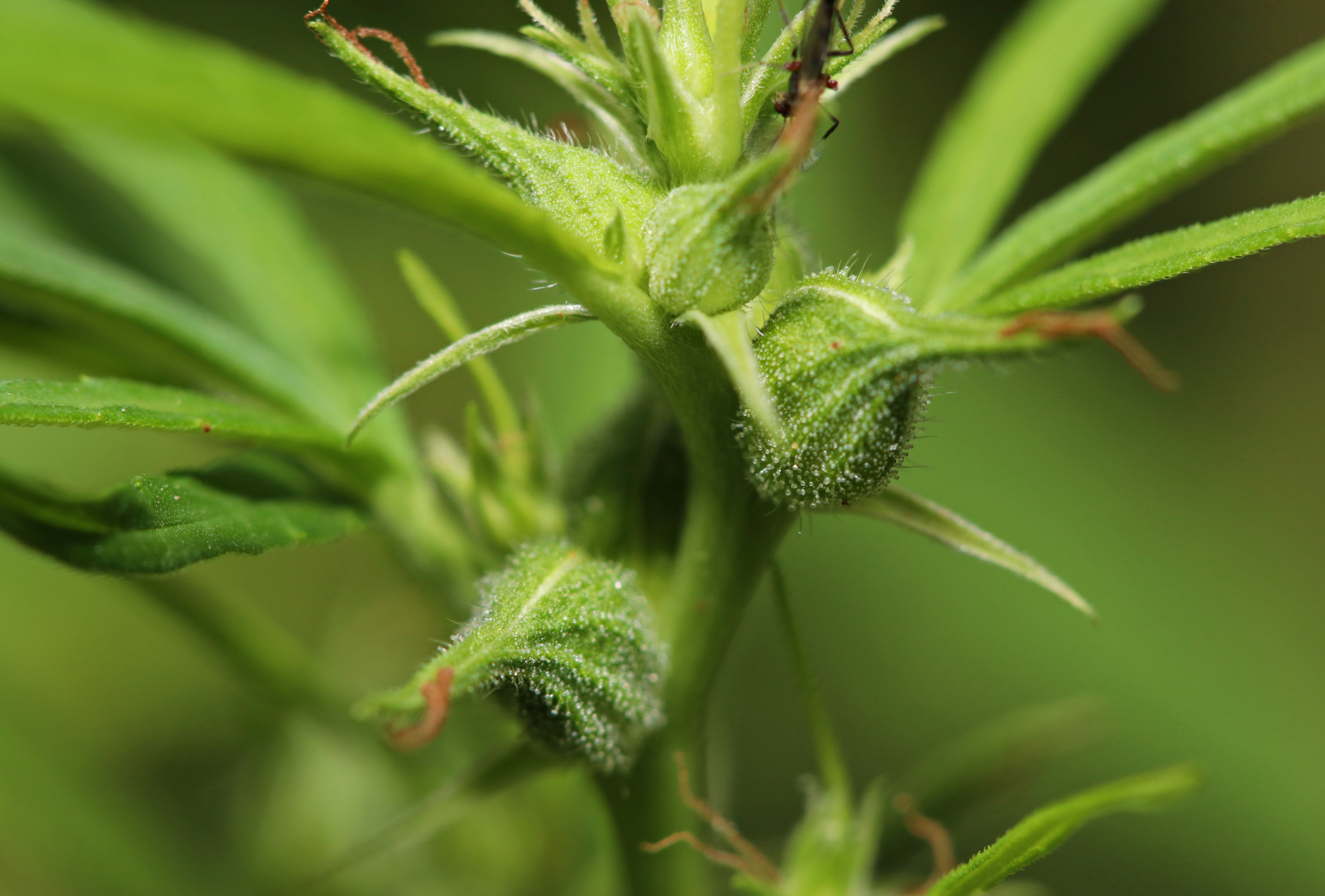
For Cannabis cultivators, efficiency is key to profitability. One of the most crucial decisions made early in the grow cycle is identifying male and female plants. Males do not produce desirable flowering material and must be culled immediately to prevent pollination, which ruins the quality of the entire crop. Early female plant selection is especially important when introducing new genetic strains to your facility to generate mother plants, or for hobbyist cannabis growers who want to optimize their available space.
The importance of DNA testing for early Cannabis sex determination
Early identification of males and females is vital for breeding programs and selective crossing to generate new genetics. Rapid sex determination saves vast amounts of time, space, and resources, allowing growers to focus energy and nutrients only on the necessary plants from the seedling stage onward.
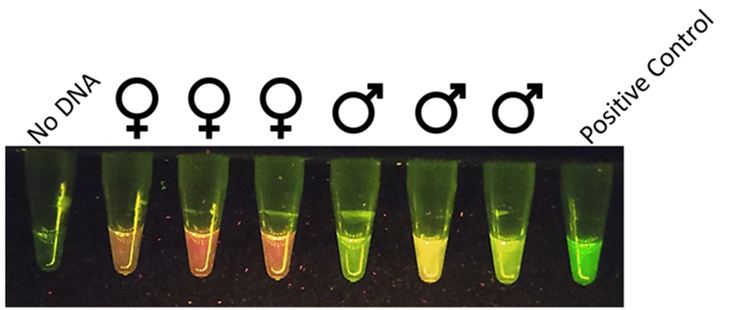
Example of Y-spotter fluoPCR test result. No DNA control on the left. Male samples are fluorescing yellow/green.
Integrating molecular tests into your horticulture practices is the most direct and precise way to achieve early identification. At miniPCR Dx, we offer two powerful DNA testing solutions, each designed to fit different operational needs: the Y-spotter fluoPCR Test and the Cannabis Sex qPCR Test.
Comparing our PCR-based solutions for Cannabis sexing
Both DNA testing solutions target specific genetic markers to identify the Y-chromosome (present only in males) with high accuracy. The choice between them depends on your testing goals.
- The Y-spotter fluoPCR Test is the ideal solution if you prioritize a low initial investment and fast, visual results for sexing large batches of plants.
- The Cannabis Sex qPCR Test provides the highest level of diagnostic assurance, featuring internal controls and quantitative software analysis, with the added capability to expand your testing to include quantitative pathogen screening (like HLVd) on the same machine.
The following table offers a detailed comparison between the two Cannabis sexing methods.
| Feature | Y-spotter fluoPCR Test | Cannabis Sex qPCR Test |
| Technology | PCR with fluorescent detection (End-point read) | Quantitative PCR (Real-time read) |
| Internal Control | Not included | Included (assures proper sample processing) |
| Throughput | 6-14 samples + 2 controls per run | 14 samples + 2 controls per run |
| Workflow Time | Quicker turnaround ( ~ 90 min), direct PCR | Longer total run time ( ~ 230 min), lysis step necessary |
| Hands-On Time | Minimal (~ 10 min) | Minimal (~ 15 min) |
| Initial Investment | Lower (all necessary material in fluoPCR bundles) | Higher (all necessary material in Cannabis qPCR Workstation) |
| Data Interpretation | Visual interpretation of fluorescence | Quantitative analysis via software |
| Equipment Versatility | Limited to Y-spotter fluoPCR | High (runs sexing and pathogen testing, including HLVd) |
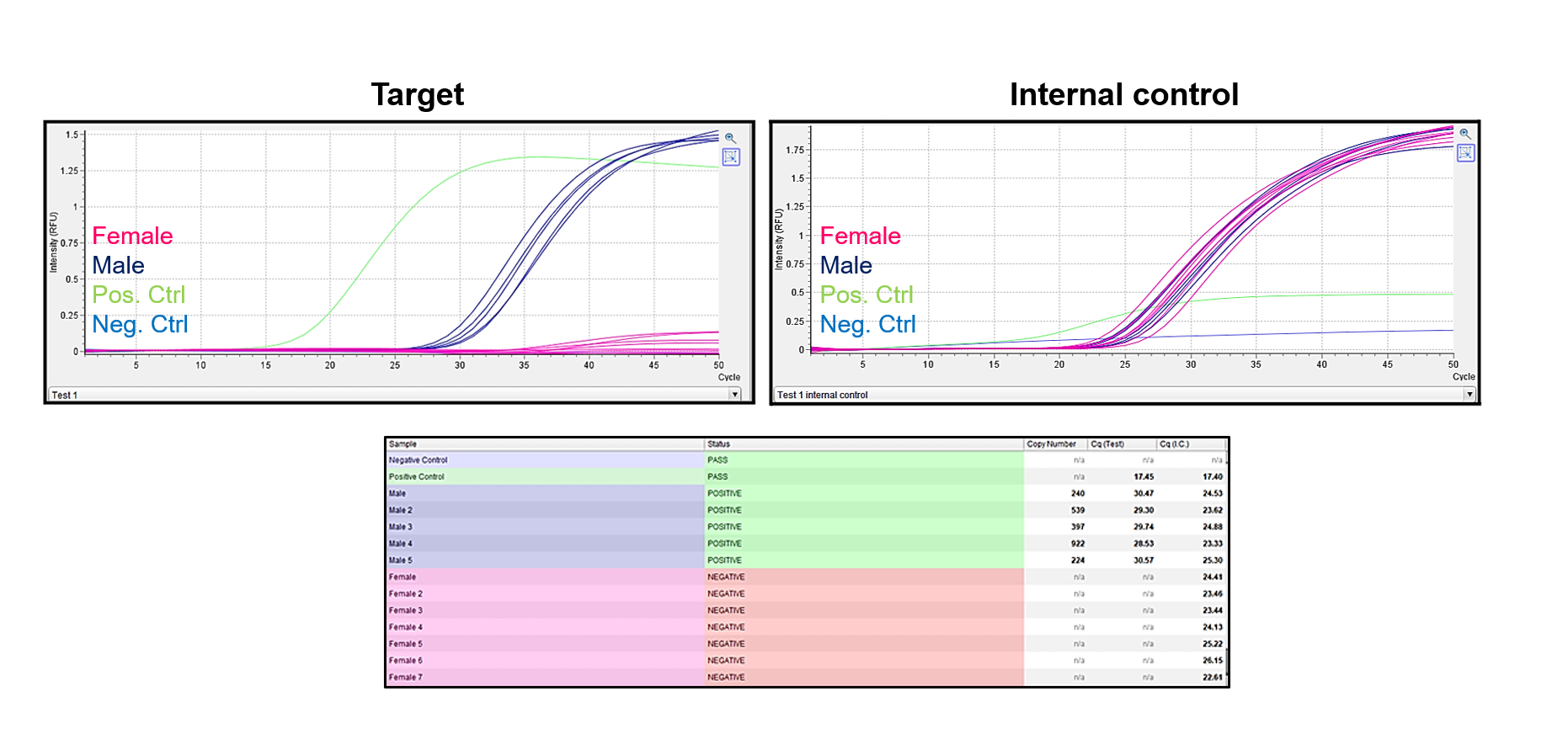
Example of a Cannabis Sex qPCR Detection Test result. The graphs show successful amplification for the internal control (a gene expressed by both male and female plants), indicating that the sample was properly processed, as well as for the target Y-chromosome in male plants. The table reports the Cq values.
Both the fluoPCR and qPCR tests include a positive control, that is synthetic DNA with the target sequence from the Y-chromosome.
In summary: choosing the right PCR-based sex test for your Cannabis grow
PCR-based Cannabis sex determination is a highly accurate molecular technique during their early growth stage (1–3 weeks), long before they develop visible sexual organs. This technology allows growers to remove male plants early, preventing pollination and maximizing the production of cannabinoid rich seedless buds (sinsemilla). Both testing options, fluoPCR or qPCR, provide the early, accurate sex identification you need to maximize the efficiency and profitability of your Cannabis grow.