
Modern farmers embrace technology to boost yields and livestock health. DNA testing is the next frontier, delivering faster answers with genetic precision. miniPCR enables farmers by offering user-friendly, affordable, and portable genetic testing tools. We believe high-level science should be accessible to everyone, from backyards to farms. With our technology and support, farmers are using DNA testing to accurately determine chick sex and identify desirable traits, such as the blue egg gene. Here we share the experience of Heidi Grable, a fellow avian breeder raising chickens since 2015 at her hobby farm Green Grables. Heidi shares below how she has been using on-farm DNA testing to optimize her breeding program.
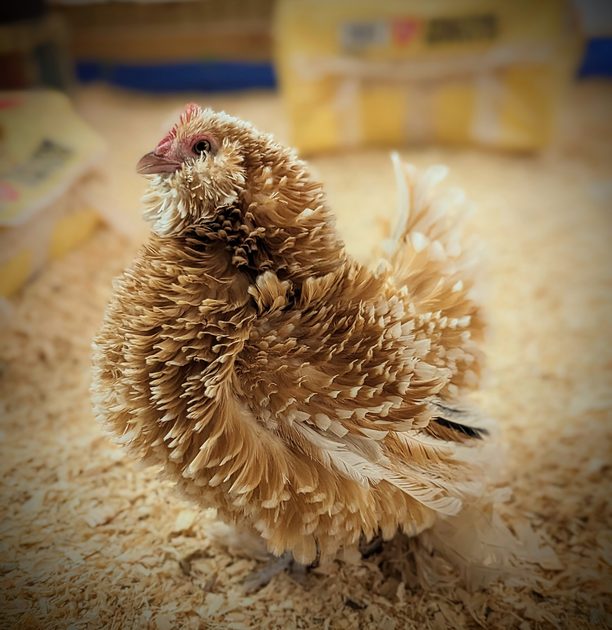
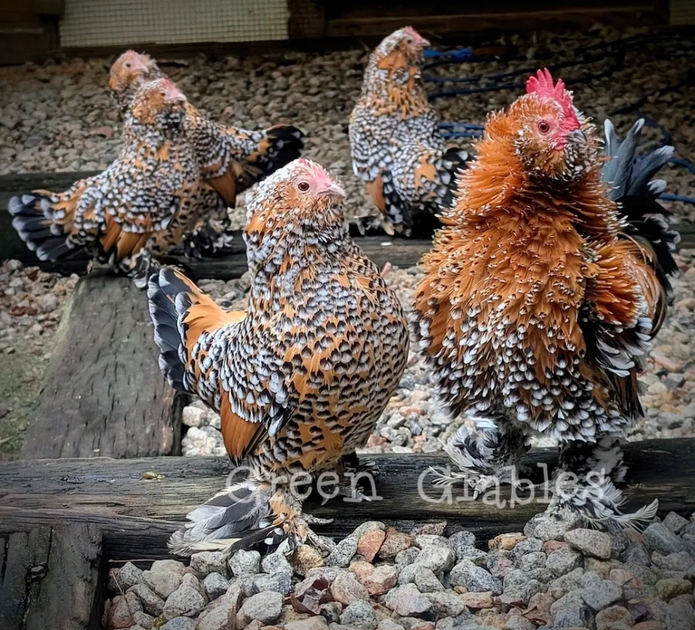
I’ve been raising chickens since 2015 at my hobby farm Green Grables in Raleigh, NC. I’ve been a biochemist and immunologist in drug discovery, an artist, a teacher, a farmer, sometimes all at the same time. My farm specializes in Belgian d’Uccles, bantam Ameraucana, and bantam Easter eggers. Raising chickens brings me a lot of joy. It allows me to connect with my community through farm visits and by helping chicken owners stock their coops, locally and nationally. I’ve had customers drive 17 hours across the country for their feathered friends. Once we even had someone fly into our airport for a chicken delivery!
On-farm DNA testing is a game-changer for poultry breeders. While you can always mail out samples, investing in your own equipment and reagents lets you bring the science home. I love projects, and chose to set up my own on-farm lab for significant savings and immediate answers.

Heidi’s approach is rooted in dedication; she hatches for excellence, pouring her time into the well-being of every bird. Beyond the baskets of fresh eggs, Heidi finds joy in the farm-life rhythm and in offering expert guidance to help other breeders succeed.
Plus, it gives me an outlet for my love of science. I’ve worked for several years on some unique varieties and breeds, and being able to tell if a bird has a copy of the recessive lavender gene or two copies of the blue egg gene through a simple test means that I don’t need to raise a huge group of birds for a year before answering my genetic questions. And the ability to find hens early in life helps my customers who cannot have a rooster avoid the heartbreak of finding out that their beloved bird must be rehomed.
I am also passionate about sharing advice to help other enthusiasts succeed. Here is how I conduct DNA testing at my farm:
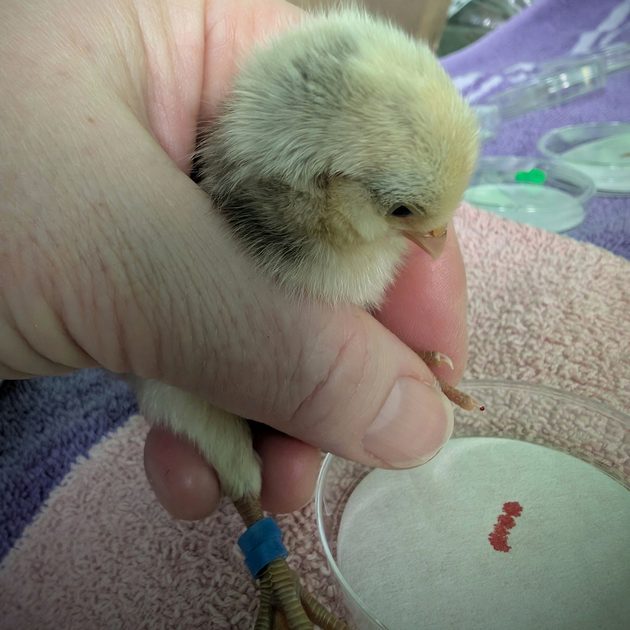
Step 1: Collect Your Samples. You can use a feather follicle or a dried blood spot. Blood can be collected from a toenail clip and spotted onto filter paper.
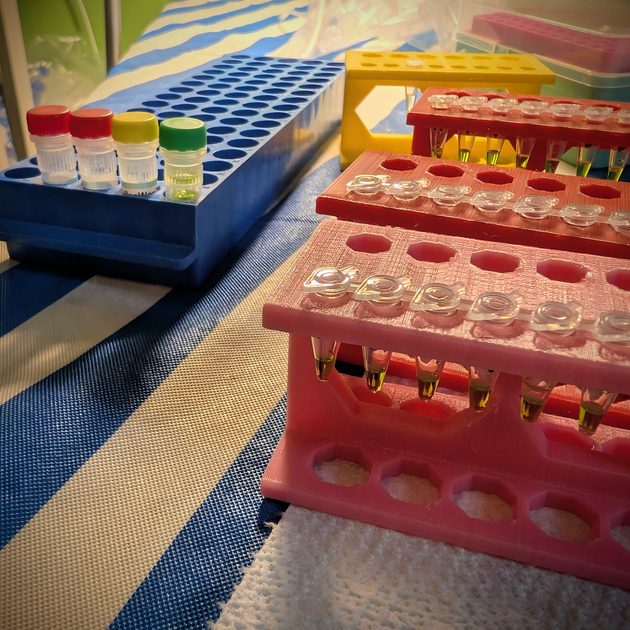
Step 2: Prep Your Reagents. You only have to mix two components, and the kit includes everything you need for accurate testing. Reagents should be handled carefully in a clean area to ensure the validity of the results. If you can follow a baking recipe, you’ll definitely rock at this!
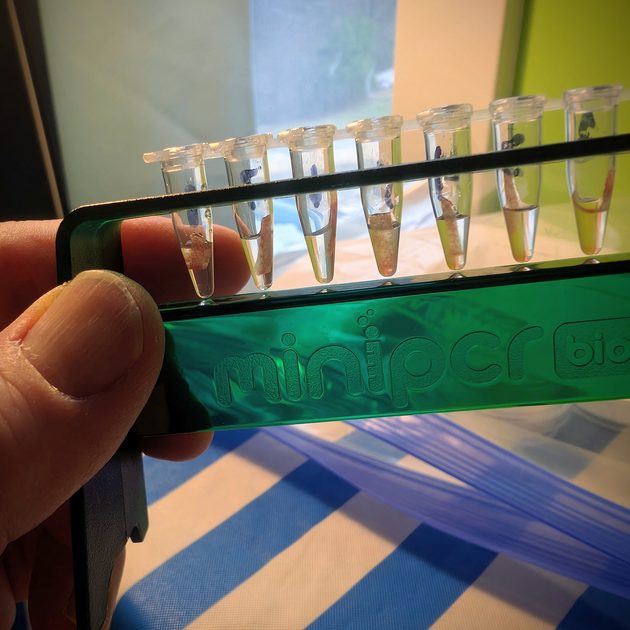
Step 3: DNA Extraction. Simply add a tiny piece of dried blood spot or the tip of a feather follicle to the provided DNA extraction buffer. In just 10 minutes, DNA is ready to test.
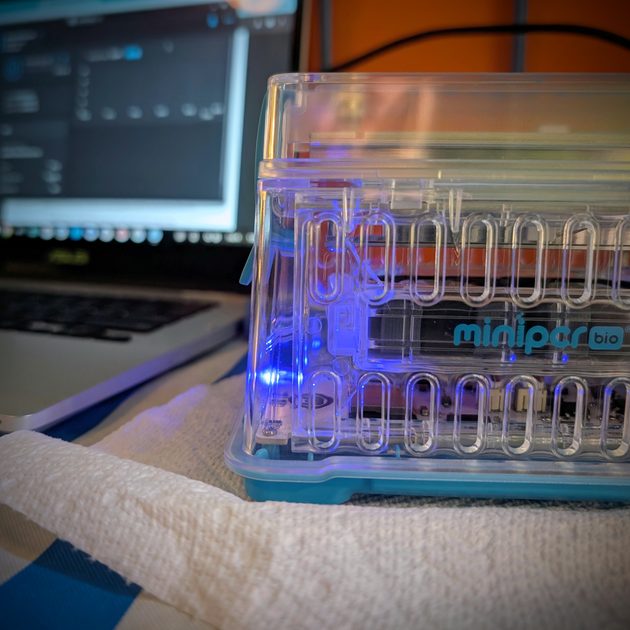
Step 4: Run the PCR. The Polymerase Chain Reaction (PCR) is a technique used to amplify DNA by making billions of copies of a target region. Although at heart sophisticated, in practice it is pretty straightforward. Combine the DNA with the kit reagents and insert the tubes into the miniPCR. This user-friendly device, which fits in the palm of your hand, will run the program automatically until completion in about 90 minutes.
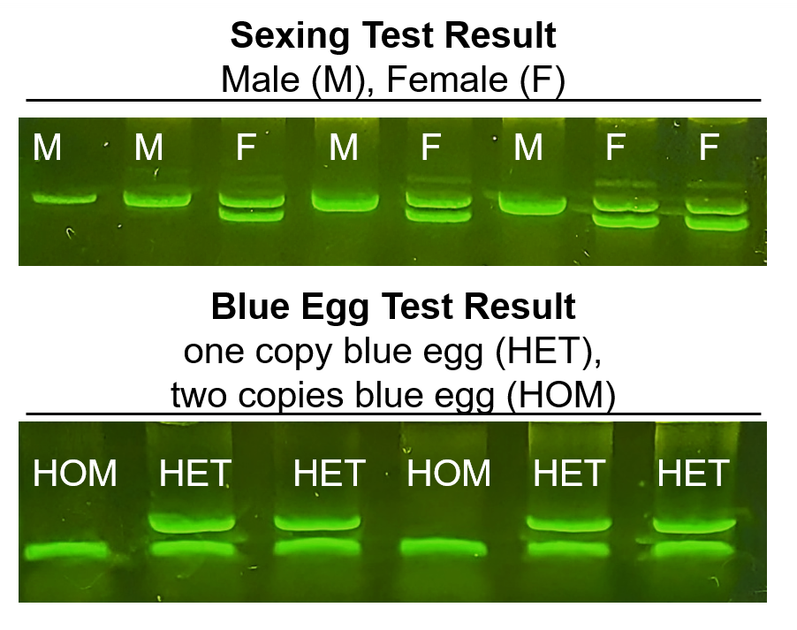
Step 5: Visualize Results. Run your samples through a “jello-like” gel for 15-30 minutes using DNA gel electrophoresis. This process allows you to separate the PCR products to obtain bright DNA results that you can directly visualize and interpret. Just take a picture and read the bands! Result interpretation is clear and fast, for example:
–Sexing: One band means male, two bands mean female.
–Blue Eggs: Two bright DNA bands mean the chick carries one copy of the blue egg gene, a single lower band equals two copies of the blue egg gene, and a lone upper band reveals that the bird doesn’t carry the blue egg gene.
Other tests, such as the Lavender chicken or tor sexing kits for different fowl are just as easy!
In just 3.5 hours (with only 30 min of hands-on work), I get accurate results from young chicks, saving an entire year in my breeding program! I can accurately determine whether any bird is a carrier of blue eggs and provide precise early sex identification. Although I have lab experience, the tests are user-friendly and require no prior formal scientific training, just a little practice. When I need help, the miniPCR team has always been available to troubleshoot.
Running a farm requires being adaptive, creating solutions, and learning new skills needed to thrive. DNA testing is a way to keep working smarter, not harder.